Waste Clearance in London
When you need waste clearance in London, you usually need it done properly, quickly, and with as little disruption as possible. Whether you are clearing a flat in Islington, emptying a terraced house in Walthamstow, removing builders’ debris from a Kensington renovation, or dealing with office rubbish in Canary Wharf, the same things matter: reliable arrival, careful handling, and a service that understands London life.
From tight stairwells and permit-controlled streets to busy high roads and limited parking, waste collection in the capital is rarely straightforward. That is why a local team with the right equipment and experience can make a real difference. A well-organised waste removal service helps you reclaim space, stay compliant, and avoid the stress of trying to manage bulky items yourself.
Our approach is simple: clear communication, practical scheduling, and a service tailored to the kind of property and waste you need removed. If you are dealing with household clutter, garden waste, office furnishings, refurbishment debris, or mixed junk, this page explains what is included, how the service works, and what to consider before booking.
Why London customers need a flexible clearance service
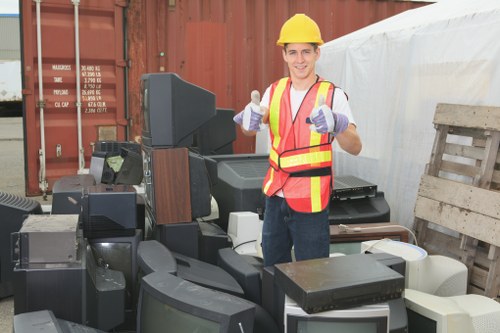
London is different from many other cities because every job tends to bring its own challenges. A house clearance in a suburban area of south London may be straightforward from the street, while a flat clearance near central London could involve narrow communal hallways, controlled parking, lift access rules, or short loading windows. That is why London waste clearance has to be adaptable rather than one-size-fits-all.
Local customers often contact a clearance team for urgent or practical reasons. You may be moving out, preparing a property for sale or let, handling a probate clear-out, making room after a refurb, or simply trying to get rid of items that will not fit in a normal bin collection. In busy boroughs, waiting too long can mean clutter builds up, access becomes harder, and the task feels more overwhelming than it should.
Good waste clearance is not just about taking things away. It is about reducing hassle, protecting the property, and making sure the work is handled sensibly from start to finish. For many customers, that also means choosing a team that can separate reusable items, manage recyclable materials responsibly, and remove waste in a way that suits local conditions.
What our waste clearance service can help with
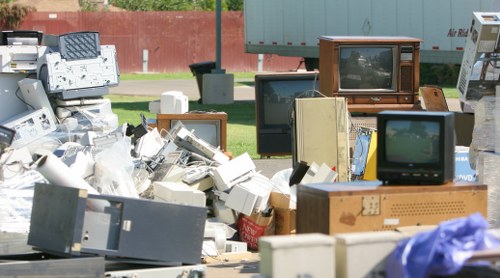
Most customers looking for waste clearance in London want a service that can cover several kinds of load in one visit. That often includes household junk, old furniture, broken appliances, general clutter, bagged rubbish, and renovation leftovers. A strong service should be able to deal with both small domestic clearances and larger commercial jobs without making the process complicated.
Typical clearance requests include:
- Household rubbish and unwanted items
- Flat clearance and apartment clearance
- Loft, cellar, garage, and shed clear-outs
- Furniture removal, including sofas, wardrobes, tables, and beds
- Appliance removal such as fridges, freezers, washing machines, and cookers
- Office furniture and business waste removal
- End-of-tenancy and pre-sale clearance
- Garden waste, green waste, and outdoor junk
- Light builders’ waste and renovation debris
- Mixed bulky waste that is awkward to move on your own
Every property is different, so the exact service can be adjusted to match the job. For example, a one-bedroom flat in Camden may only need a small van load and careful stair access, while a shop in Croydon might need a larger clearance of display units, packaging, and back-room waste. A practical team will assess the load, understand the access, and plan accordingly.
How the clearance process works

The best waste removal services keep things straightforward. You should not need to deal with endless forms or complex arrangements just to clear a property. A typical process starts with a description of what needs removing, followed by an assessment of the load and the access conditions. From there, a suitable time can be arranged for collection or full clearance.
On arrival, the team should work efficiently and with care. That includes handling items safely, being considerate in shared buildings, and removing waste without causing unnecessary damage to walls, floors, or communal areas. In many London properties, this is especially important because older buildings, converted flats, and narrow staircases can make moving bulky items more challenging.
The process usually ends with loading, removal, and making sure the area is left tidy once the job is complete. In some cases, especially with larger house or probate clearances, customers may want items separated into categories such as keep, recycle, donate, and dispose. That kind of organised approach saves time and reduces stress.
Typical steps in a waste clearance booking
- Describe the items or type of waste you need removed.
- Explain where the property is and what access is like.
- Choose a convenient collection time.
- Show the team what needs to go when they arrive.
- Have the waste removed and the area cleared efficiently.
For customers who want a fast turnaround, same-day or next-day availability may be useful when scheduling allows. That can be especially helpful when handing back keys, preparing for decorators, or completing a move.
Domestic waste clearance across London homes

Homeowners, tenants, landlords, letting agents, and family members managing a property all use domestic clearance services for different reasons. Some jobs are small and simple, such as clearing out a few unwanted items after a furniture replacement. Others are more involved, such as a full house clearance after a long-term occupancy or a bereavement.
London homes come in many forms: mansion blocks, ex-local authority flats, Victorian terraces, mews houses, modern apartments, townhouses, and shared properties. Each type of property can create its own access issues. A basement flat in Fulham may involve several steps and limited street space, while a top-floor apartment in Peckham may require careful coordination with building rules and lift use.
Residential customers often need support with:
- Clearing out unwanted furniture before moving house
- Removing accumulated clutter from lofts, cupboards, and storage areas
- Emptying a property after tenants leave items behind
- Preparing a home for cleaning, refurbishment, or valuation
- Managing probate clearances with respect and organisation
Practical benefit: a professional team can save you multiple trips to a recycling centre, reduce lifting strain, and help you complete the job in far less time. For many households, that is the difference between a project that drags on for weeks and one that is dealt with in a single visit.
Commercial waste clearance for London businesses
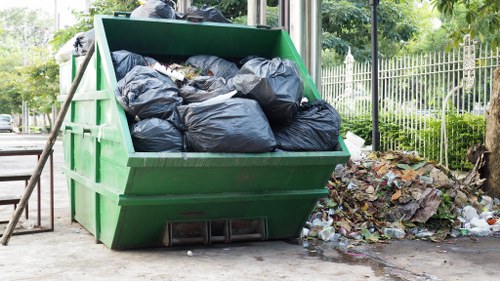
Businesses in London often need waste clearance services that are fast, discreet, and reliable. Offices, shops, restaurants, hospitality venues, clinics, studios, and shared workspaces may all need periodic clear-outs or one-off removals. In commercial settings, the pressure is often about keeping operations running while waste is removed without interrupting staff or customers.
Typical commercial clearance jobs include old desks, chairs, filing cabinets, packaging, shelving, display materials, end-of-lease items, and general rubbish from a refit or relocation. For offices in areas like the City, Holborn, Shoreditch, and Southbank, timing can matter as much as capacity. Businesses often need an early collection, an out-of-hours slot, or a plan that works around building access rules.
For commercial customers, a strong service should also be able to manage mixed loads responsibly. Not every job is just “junk”. Some items may need to be separated from recyclables or handled carefully due to data, confidentiality, or health-and-safety considerations. If you are moving offices or clearing out a unit, it helps to choose a local company that understands the pace and practical realities of London business premises.
Common commercial reasons to book clearance
- Office relocation or downsizing
- End-of-lease and dilapidation clear-outs
- Retail refits and stockroom clearances
- Hospitality back-of-house waste removal
- Regular clearing of accumulated non-hazardous waste
Whether your business is in Westminster, Stratford, Wimbledon, or North London, a dependable clearance service can help you keep spaces usable and presentable with less interruption.
Why local knowledge matters in London
Choosing a local company for waste clearance in London can be more useful than it first appears. London is not just large; it is highly varied. Parking rules in one borough may be very different from the next. Some streets have loading restrictions. Some buildings require advance notice for access. Some estates have narrow entrances or limited vehicle turnaround space. A local team is more likely to know how to approach these issues calmly and efficiently.
That experience matters when you need a clearance done without headaches. For example, a team used to working in busy parts of Hackney, Brixton, Ealing, or Hammersmith is likely to understand the importance of planning, avoiding unnecessary delay, and communicating clearly if access conditions change on the day. Local familiarity can save time and reduce the chance of a job becoming more difficult than it needs to be.
It is also reassuring to work with people who regularly handle the kinds of buildings common in London: basement flats, converted Victorian houses, mansion flats, warehouse conversions, shared corridors, and commercial premises with tight back entrances. They know that the right approach is not about force; it is about preparation, careful lifting, and the right vehicle for the load.
Access and parking issues commonly faced
- Permit zones and controlled parking areas
- Restricted loading bays and time windows
- Narrow roads or one-way streets
- Shared entrances and communal hallways
- Stairs, lifts, and limited manoeuvring space
Because of these issues, it helps to give as much detail as possible when booking. Information about floor level, whether there is lift access, and how close a vehicle can get to the property can make the service smoother for everyone involved.
What is included in a professional clearance service?
A proper clearance service should feel thorough, but it should also be easy to understand. Customers want to know what happens on the day and what they are paying for. In general, a waste clearance team should collect the agreed items, load them safely, remove them from the property, and handle disposal responsibly according to the type of waste collected.
What is often included:
- Loading and removal of unwanted waste
- Careful handling of furniture and bulky items
- Support with mixed domestic or commercial loads
- Sorting where practical for recycling or reuse
- Tidy-up of the cleared area once work is complete
Depending on the job, extra care may be needed for stairs, communal areas, and fragile surroundings. That is particularly true in older London buildings where walls, banisters, or entrances can be easily marked if items are moved carelessly.
Some customers also want the service to include partial clearances rather than a full empty property. That is often the case when only certain rooms, storage spaces, or heavy items need attention. A flexible team can adapt to both small and large jobs without making the customer overbook or overspend on unnecessary removal.
Useful things to ask before you book
- Can you remove the types of waste I have?
- Do you need any access information in advance?
- Can you handle stairs or limited parking?
- Is the service suitable for one-off or larger clearances?
- What information should I prepare for a quick quote?
How pricing is usually affected
Many customers want to know how waste clearance pricing is worked out. While exact prices vary from job to job, the main factors are usually easy to understand. The size of the load, the kind of items being removed, how long the job will take, and the access conditions all play a part. A pile of bags outside a house in Harrow is very different from a third-floor flat clearance in central London with no lift and limited parking.
Common pricing factors include:
- Volume of waste or number of items
- Type of materials involved
- Access to the property and collection point
- Distance and parking considerations
- How much loading and labour is needed
- Whether the job is scheduled urgently or at a preferred time slot
It is always sensible to describe the job as accurately as possible. Photos can sometimes help when a quote is being prepared, but even without them, a good description of the items, floors, and access conditions can support a more useful estimate. If the job changes on arrival, the final arrangement may need to reflect the updated scope, so clarity from the start is helpful.
Tip: Separate items into piles if you can. That makes it easier to explain what needs to go and helps the clearance team estimate the work more accurately.
Preparing for your waste clearance appointment
A little preparation can make the clearance faster and easier. You do not need to do everything in advance, especially if the items are heavy or awkward, but simple steps can help the team get started quickly and reduce confusion on arrival.
Here is a practical checklist for customers:
- Identify the items that must be removed.
- Separate anything you want to keep.
- Make sure the access route is clear where possible.
- Let the team know about stairs, gates, or parking restrictions.
- Remove small valuables, documents, or personal items before the visit.
- Tell household members, staff, or neighbours if access will be busy.
If you are managing a property on behalf of someone else, it is worth confirming what should stay and what should be taken away before the booking day. This is especially useful during probate clearances, landlord clear-outs, and end-of-tenancy jobs where the contents may include a mix of wanted and unwanted items.
Preparation also helps with commercial jobs. In an office clearance, for example, staff may need to remove papers, devices, or personal belongings before the clearance team arrives. In a shop or hospitality setting, stock and equipment often need to be checked first so the wrong items are not removed by mistake.
Areas covered across London
Waste clearance needs can come up anywhere in the capital, from central districts to outer boroughs. A local London service should be able to cover a wide area while still understanding the practical differences between each location. Customers may be based in a single borough or across multiple parts of the city depending on the property or business they manage.
Common areas we cover include:
- Central London: Westminster, Soho, Holborn, Covent Garden, Bloomsbury
- North London: Islington, Camden, Haringey, Finchley, Barnet
- East London: Hackney, Tower Hamlets, Stratford, Newham, Waltham Forest
- South London: Lambeth, Southwark, Lewisham, Croydon, Wimbledon
- West London: Hammersmith, Fulham, Ealing, Kensington, Hounslow
- Outer areas and nearby districts across Greater London
Local relevance matters because each area has different property layouts, traffic patterns, and access challenges. A team working across London on a regular basis can move between these settings while keeping the service organised and responsive.
Why customers choose a professional waste clearance service
There are many reasons customers decide to book a professional service instead of trying to do the job themselves. Time is one of the biggest. Clearing items from a property can take much longer than expected when you have to sort, lift, carry, load, transport, and dispose of everything yourself. In a city like London, that process can become even more difficult when you factor in traffic, parking, and disposal site rules.
Another reason is physical effort. Heavy furniture, awkward appliances, and mixed rubbish can be difficult and unsafe to move without the right help. Professional waste clearance reduces strain and helps you avoid damage to property or injury during lifting and carrying.
There is also the value of peace of mind. Knowing that the job is being handled by people who understand the logistics of London properties can make a huge difference, particularly if you are on a deadline. Many customers book a clearance because they need to hand back a tenancy, begin renovations, or make a home ready for sale. In those situations, a smooth and reliable service is often the simplest way to stay on schedule.
Suitable for one-off and larger clearances
Whether you need a single bulky item removed or a full property emptied, the service can be scaled to suit. That flexibility is especially useful for landlords, homeowners, estate managers, and businesses with changing needs.
Common questions about waste clearance in London
Can you clear flats and upper-floor properties?
Yes, most waste clearance jobs in London involve flats, maisonettes, or upper-floor properties. It helps to mention lift access, stairs, and any building rules before the appointment so the job can be planned properly.
Do I need to move items outside first?
No, not usually. A professional team should be able to collect items from inside the property as long as the access is safe and clear enough to work. If some items are already outside, that can help speed things up, but it is not normally required.
Can you handle mixed waste?
Yes, many London customers have mixed waste that includes furniture, bags, small appliances, cardboard, and general clutter. The key is describing the load clearly so the right vehicle and team can be arranged.
What if I only need part of a property cleared?
That is very common. You may only want a loft, garage, office room, or specific area cleared. Partial clearances are often the most practical solution when the rest of the property still contains items that are staying.
How quickly can a booking happen?
Availability depends on the workload and the type of job, but many customers need a quick turnaround. If you have a deadline such as an exchange, check-out, or handover, it is best to enquire early so a suitable slot can be arranged.
What should I do with personal documents or valuables?
Remove these before the clearance begins. It is always sensible to keep documents, keys, jewellery, electronics, and sentimental items separate so nothing important is taken by mistake.
Book a waste clearance service that works for London life
If you need waste clearance in London and want the job handled with care, speed, and local knowledge, it makes sense to choose a team that understands the realities of the city. From apartment blocks to family homes, from office suites to retail units, the right service can save time and remove stress at exactly the point when you need things to feel easier.
Contact us today to discuss your clearance needs, explain the property access, and arrange a suitable visit. Whether the job is small, urgent, or more involved, a straightforward quotation process helps you move forward with confidence.
Request a free quote when you are ready, and provide as much detail as you can about the items, location, and access. If you need a local team for domestic or commercial waste removal, book your service now and get the space back under control.
For customers across London, from the centre to the outer boroughs, a reliable clearance service is often the simplest way to deal with unwanted waste without the disruption of doing it alone. When your property needs clearing, the right support can make the whole task feel much more manageable.