Probate House Clearance in London
When a loved one has passed away, handling the practical side of a property can feel overwhelming. Probate house clearance in London is often one of the most emotional and time-sensitive tasks families face, especially when the home contains a lifetime of belongings, important paperwork, and furniture that must be sorted carefully. Whether the property is a flat in Westminster, a terraced house in Southwark, a maisonette in Islington, or a larger family home in Richmond, a clear and respectful approach can make all the difference.
Our service is designed for people who need a calm, organised, and discreet way to clear a property during probate. We understand that this is not just about removing items. It may involve separating valuables from general contents, identifying things that should be kept by family members, managing donations or recycling, and leaving the property ready for valuation, sale, or handover. If you need practical support, contact us today to discuss your situation and request a free quote.
For many customers, the main concern is finding a local team that understands London properties and the pressures that come with them. Parking restrictions, controlled access, narrow staircases, top-floor flats, estate rules, and busy roads can all affect how a clearance is carried out. A good probate clearance service takes these realities into account from the start, making the process smoother for families, executors, solicitors, landlords, and estate agents alike.
What Probate House Clearance Means in Practice

Probate house clearance is the careful removal and sorting of items from a property that forms part of an estate. In simple terms, it usually happens after someone has died and the home needs to be prepared for the next step, whether that is sale, transfer, renovation, or letting. Unlike a standard declutter or general rubbish removal job, probate clearance often requires more sensitivity, more organisation, and more attention to the items left behind.
It can include everything from old furniture and clothing to books, ornaments, white goods, paperwork, and personal effects. In some cases, there may also be loft contents, garage items, sheds, storage cupboards, or outbuildings to deal with. A respectful team will always work at the pace needed for the situation, allowing time for family members to make decisions and ensuring that nothing important is removed by mistake.
Many people search for probate house clearance in London when they need help managing a property from start to finish. That might mean clearing a single room after relatives have taken keepsakes, or it could mean a full house clearance before estate agents begin viewings. In either case, the aim is the same: to make a difficult task easier, safer, and more manageable.
Why London Customers Often Need a Specialist Service
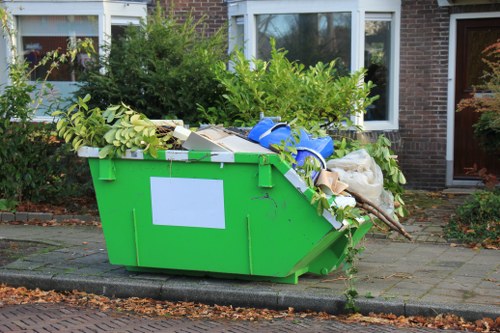
London presents its own challenges, and these are often the reason families choose an experienced local team rather than trying to manage the job alone. Properties may be in busy high-rise blocks, conservation areas, converted townhouses, council estates, or period terraces with limited access. Each setting brings different requirements, and a clearance must be planned around them carefully.
For example, a probate flat in Camden may have no lift and limited loading space outside. A house in Hackney might sit on a narrow residential street with strict parking restrictions. A property near Westminster or the City may need coordinated timing to avoid disruption to neighbours, commuters, or building management. In suburbs such as Ealing, Bromley, or Wimbledon, access may be easier, but the volume of items can still be substantial. Local knowledge helps the team prepare properly before arriving.
Understanding the practical side matters. A well-organised clearance reduces stress for executors and family members, keeps the process moving, and helps avoid unnecessary delays. It also helps protect the property itself by preventing damage to walls, floors, lifts, hallways, and communal areas.
Who Uses Probate Clearance Services?

Probate clearance is requested by a wide range of people. Sometimes the call comes from a son or daughter who is dealing with the estate of a parent. Sometimes it is a solicitor or executor who needs a reliable contractor to clear the home so probate administration can continue. In other cases, landlords, letting agents, or property managers need the contents removed after a tenant has died and the estate is being handled.
Some customers are dealing with a home that has been lived in for decades, meaning there may be more contents than expected. Others may need support with a smaller London apartment where items were carefully stored in cupboards, wardrobes, and under-bed spaces. Whatever the property type, the aim is to make the process straightforward, respectful, and efficient.
It is also common for families to need help when they live outside London but the property is in the capital. Travelling back and forth, arranging keys, and coordinating with professionals can be difficult from a distance. A local clearance team can reduce the burden by handling the property on-site and keeping the process moving in a practical way.
What Is Usually Included in the Service?
Every property is different, but a typical probate house clearance service in London usually includes a combination of sorting, removal, and responsible disposal. The exact scope can be adjusted depending on what the executor or family wants to keep, donate, recycle, or discard. A reliable team will listen carefully before starting so they understand what matters most to you.
Commonly included elements:
- Removal of unwanted furniture, household contents, and general items
- Sorting of items that may be kept by relatives or stored for later review
- Careful handling of paperwork, photographs, jewellery, and sentimental belongings
- Uplift of white goods, soft furnishings, and bulky items
- Loft, cellar, garage, shed, and storage area clearance where required
- Responsible recycling and appropriate disposal of unwanted contents
- Donation of suitable items where this is part of the agreed plan
- Sweeping through at the end so the property is left tidy
In some cases, families ask for a partial clearance rather than a full one. That might involve removing only specific rooms, or clearing everything except a list of items designated for relatives. The more clearly this is agreed in advance, the easier and faster the work tends to be.
Items That Need Extra Care
During probate, some items require close attention because they may have financial or personal significance. Examples include documents, share certificates, passports, old wills, antiques, art, rare books, watches, and items that may be valued separately. A careful team will treat these items with the respect they deserve and will pause if anything unusual or potentially important is found.
It is always worth checking drawers, bedside cabinets, wardrobes, and hidden storage spaces before a full clearance begins. These are the places where small but meaningful items are often stored and can easily be missed if the process is rushed.
How Probate House Clearance in London Works
The process should feel clear and manageable from the first conversation. While every property is different, most probate clearances follow a sensible sequence that helps reduce stress and avoid mistakes. The purpose is not only to remove contents, but also to support the wider practical steps involved in handling an estate.
Typical process:
- Initial discussion – You explain the situation, the property type, the area, and what needs to be cleared.
- Property assessment – A visit or information review may be arranged to understand access, volume, and any special instructions.
- Sorting instructions – You tell the team what must be kept, what can be removed, and whether donation or recycling is preferred.
- Clearance day – The team arrives with the right equipment and carries out the work carefully and efficiently.
- Final tidy – The property is left ready for the next stage, such as valuation, cleaning, or sale preparation.
Clear communication is especially important in probate situations. If several family members are involved, it helps to decide in advance who can authorise what, where keys are held, and what items are off-limits. This keeps the clearance efficient and avoids confusion on the day.
Types of London Properties We Commonly Clear

London contains a wide mix of homes, and probate clearance needs to suit each one. A Victorian terrace in Battersea may present different challenges from a purpose-built flat in Stratford or a converted building in Kensington. Our experience with local properties means we understand how to approach each job with care and common sense.
We regularly handle:
- Studio flats, apartments, and maisonettes
- Terraced houses and semi-detached homes
- Large family houses and period properties
- Retirement apartments and sheltered accommodation
- Council properties and housing association homes
- Rental properties and landlord-managed homes
- Commercial premises with estate-related contents
Some clearances involve only household items, while others include mixed contents from an office room, shop storage area, or home business space. If the property has been used partly for work, it may contain filing cabinets, office furniture, IT equipment, or stock that also needs to be sorted appropriately. A local team can adapt to these different requirements without unnecessary delays.
What Happens to the Contents?
One of the most common questions people ask is what will happen to the items removed from the property. The answer depends on the items, the instructions given, and the condition of the contents. In a probate clearance, there is often a mix of reusable items, recyclable materials, and things that simply need to be removed responsibly.
Useful furniture, appliances, and household goods may be suitable for resale, reuse, or donation if that is part of the agreed arrangement and the items are in acceptable condition. Materials such as metals, wood, cardboard, and some plastics may be separated for recycling. General waste and damaged items are handled through the appropriate disposal routes. Sensitive items, confidential papers, and personal documents should be managed with care and never treated casually.
This approach is particularly important in London, where a property may contain decades of accumulated belongings and where space for sorting on-site can be limited. A clear plan makes it easier to move methodically, protect valuables, and reduce the amount of unnecessary waste sent to landfill.
Preparing for a Probate Clearance

Some preparation before the team arrives can save time and reduce stress. You do not need to sort everything yourself, and in many cases that would be too much to ask during a difficult period. However, a few simple steps can make the process easier for everyone involved.
Useful preparation checklist
- Gather any keys, access codes, or building entry instructions
- Identify items that family members definitely want to keep
- Set aside documents that may need to be reviewed separately
- Let all relevant family members know the agreed plan
- Flag any restricted rooms, cupboards, or personal storage spaces
- Tell the team about parking, lift access, or timed entry requirements
- Remove anything you want to take before the clearance begins
If the property is in a managed block, it is helpful to check whether building rules apply to loading, lift use, or moving bulky items through communal areas. In busy parts of London, these details can matter a great deal, especially if the clearance needs to be completed within a short time window.
Family members sometimes worry that they must be present for the whole job. In reality, many probate clearances are handled with limited on-site attendance once clear instructions have been agreed. What matters most is that the instructions are accurate and that the team has access to the property and to any key information.
Pricing Factors for Probate House Clearance in London
Because every estate and property is different, probate clearance pricing is usually based on a number of factors rather than a fixed one-size-fits-all figure. This allows the service to reflect the amount of work involved fairly and accurately. A reputable local company should explain these factors clearly when giving a quote.
Common pricing factors include:
- Size of the property and amount of contents
- Number of rooms and additional spaces such as lofts or garages
- Ease of access, including stairs, lifts, and parking availability
- Type of items to be removed, especially heavy or bulky pieces
- Whether a partial or full clearance is required
- Distance to recycling or disposal facilities
- Time needed for sorting, loading, and on-site work
London access challenges can affect the planning as much as the volume of items. For example, a small flat with difficult stair access may take longer than a larger property with straightforward parking. Likewise, a road with strict loading limits can affect how the job is organised. This is why local experience matters so much.
If you are comparing services, ask what is included in the quote and how access issues are handled. That can help you choose a company that is realistic, transparent, and prepared for the practical realities of the property.
Why a Local Company Can Be Better
Choosing a London-based probate clearance team offers several practical benefits. Local crews understand the layout of the city, know how to plan around busy roads, and are more likely to be familiar with the kinds of properties common in your area. This can save time and reduce complications, especially where access or parking is limited.
It also means communication is often easier. If something changes, if the executor needs an update, or if the property requires a second visit, a local team can respond more flexibly. For many customers, that peace of mind is just as important as the clearance itself.
Areas Covered Across London
Probate house clearance in London is needed across the city, from central boroughs to outer residential areas. Jobs may be completed in places such as Westminster, Camden, Islington, Hackney, Tower Hamlets, Southwark, Lambeth, Hammersmith and Fulham, Kensington and Chelsea, Wandsworth, Lewisham, Greenwich, Brent, Ealing, Hounslow, Merton, Sutton, Richmond upon Thames, Bromley, Croydon, and beyond.
We also regularly assist customers in neighbourhoods and districts where property styles vary widely, including Brixton, Clapham, Fulham, Peckham, Notting Hill, Wood Green, Wimbledon, Stratford, Canary Wharf, Canning Town, Shepherd’s Bush, Acton, and Dulwich. Whether the location is central, suburban, or on the edge of the city, the same careful approach applies.
Because London is so varied, a local service is useful not just for convenience but for planning. Some streets have resident permit zones, some buildings require advance booking for lifts or loading bays, and some properties are hard to access at certain times of day. A team that works in London regularly will already be thinking about these issues before they become problems.
Probate Clearance for Solicitors, Executors, and Estate Professionals
Professional support is not only for families. Solicitors, executors, estate administrators, landlords, and agents often need a trustworthy clearance company that can work to instructions and keep the process orderly. In probate matters, timing can matter, documentation may need to be accurate, and access may need to be coordinated between several parties.
A strong clearance partner can help by keeping to agreed instructions, respecting property boundaries, and working efficiently without causing unnecessary disruption. Where necessary, the team can separate areas of value from general contents and ensure the property is left in a condition suitable for the next stage of work. This is especially useful when a property is being prepared for valuation, marketing, or refurbishment.
For commercial customers, it can also be important that the work is handled in a way that supports the wider estate process. That may include clearing office furniture, stock, archive materials, or equipment from mixed-use premises. If you need a local clearance arrangement that is practical and dependable, book your service now or request a free quote.
Frequently Asked Questions
How long does a probate house clearance take?
The time required depends on the size of the property, the amount of contents, the access, and whether items need to be sorted in detail. A small flat may be cleared quickly, while a large house with loft, cellar, and outbuildings will naturally take longer. The best approach is to discuss the property in advance so a realistic plan can be made.
Do I need to be present during the clearance?
Not always. Many customers prefer to give instructions ahead of time and let the team work without them being on site. If keys, access arrangements, and clear instructions are in place, the clearance can usually proceed smoothly. Some families do choose to be present at the start or end of the job, especially if there are items they want to review personally.
Can you separate items for family members?
Yes, that is often part of the service. If you have a list of items to keep, they can be set aside before general clearance begins. It is useful to mark rooms or items clearly and to tell the team about anything that should not be moved.
What if there are valuable or sentimental items in the property?
These should be identified early so they can be protected during the clearance. If you are unsure whether something has value, it is better to pause and review it before removal. Probate clearances often involve items with emotional importance, so a careful approach is always best.
Can you help with properties that have difficult access?
Yes. Many London homes have access challenges such as stairs, narrow hallways, permit-only parking, or no lift. A local team will plan around these factors and bring the right equipment to do the job safely and efficiently.
What if the property is full of paperwork?
Paperwork is common in probate properties, and it should be handled with care. Important documents can be separated, while unneeded papers are disposed of appropriately. If you want documents reviewed before removal, that can be discussed as part of the plan.
Why Choose a Probate Clearance Service Rather Than Doing It Yourself?
Some families begin by thinking they will clear the property themselves. In theory that can seem manageable, but in practice it often becomes physically demanding and emotionally exhausting. Sorting through a loved one’s belongings can be difficult, especially when there is grief, time pressure, and a long list of practical tasks to handle at the same time.
A professional probate clearance service brings structure to the process. It reduces the number of trips required, helps prevent injury from lifting heavy items, and allows the property to be cleared efficiently. It also helps ensure items are handled consistently and responsibly. For many customers, that combination of care and practicality is exactly what they need during a demanding time.
London properties can make DIY clearance especially challenging because of transport, parking, and building access. A team that knows how to work in the city can save a great deal of effort and avoid problems that might otherwise slow everything down.
Ready to Arrange Probate House Clearance in London?
If you need a respectful, local, and organised probate clearance service, we are ready to help. Whether the property is in central London, a surrounding borough, or an outer area with more space, the same careful approach applies. We can assist with partial clearances, full house clearances, and property preparation for the next stage of the probate process.
From the first conversation through to the final tidy-up, the goal is to make things easier for you. You may be dealing with a family home, a rental property, or an estate-managed residence, but the need is often the same: a practical solution handled with care. Contact us today to request a free quote and find out how we can help with your property in London.
Probate house clearance in London does not have to feel unmanageable. With the right local support, you can move forward with confidence and keep the estate process on track.