House Clearance in London
If you are looking for House Clearance in London, you may be dealing with more than just a room full of items. It could be a full property clear-out after a move, a probate clearance, a landlord turnaround, or simply the need to reclaim space in a busy home. In London, where properties range from compact flats and period terraces to large townhouses and mixed-use buildings, a professional clearance service can save time, reduce stress, and make a difficult job feel manageable.
Whether you are in Central London, North London, South London, East London, or West London, the practical challenges are often the same: limited parking, narrow staircases, basement access, shared entrances, lift restrictions, loading bays, and tight time windows. A local team that understands the city can help you plan the clearance properly, work safely, and remove items efficiently with minimal disruption to neighbours or building management.
Need to clear a property quickly or carefully? Our London house clearance service is designed for real homes, real schedules, and real access issues. From single rooms to full buildings, we help households, landlords, letting agents, solicitors, and businesses clear unwanted items in a straightforward, respectful way.

Why choose a house clearance service in London?
Clearing a property in London is rarely as simple as putting things in a few bins. Many homes contain bulky furniture, old appliances, loft contents, wardrobes, general clutter, or items that need to be separated for reuse, recycling, and disposal. A trained clearance team can take on the physical work and help you avoid multiple trips to the tip, unnecessary lifting, and the hassle of arranging vehicle access in busy streets.
London properties also vary widely, which means the job needs to be handled with flexibility. A flat in a mansion block may require careful coordination with concierge staff and a lift booking. A terraced house in South London may need items carried through narrow hallways and down steps. A warehouse unit in East London may involve mixed commercial waste, shelving, office furniture, and old stock. The right service is built around that kind of variety.
Another reason local customers choose professional clearance is time. When you are preparing a home for sale, managing a tenancy changeover, dealing with a bereavement, or trying to make room for renovation work, delays can be costly. A reliable team can work to a schedule, arrive prepared, and complete the clearance efficiently so you can move on to the next stage.
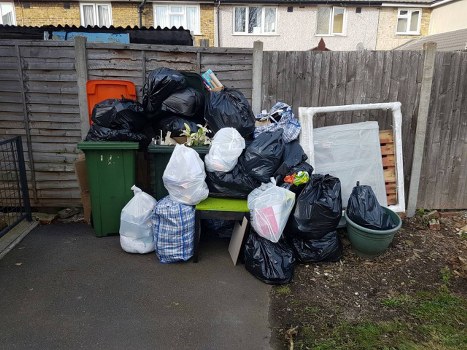
What our London house clearance service can include
Every property is different, so the scope of a clearance can vary. Some customers only need a few bulky items removed. Others need a full contents clearance from top to bottom. A well-planned service should be flexible enough to handle both.
Typical items we can remove
- Furniture such as sofas, chairs, beds, wardrobes, tables, and cabinets
- White goods and appliances, including fridges, freezers, washing machines, and cookers
- General household clutter, bags, boxes, and stored belongings
- Loft, cellar, garage, shed, and storage unit contents
- Office furniture, filing, and unwanted commercial items
- Garden furniture, outdoor equipment, and non-hazardous exterior waste
- Mixed items from probate, tenancy end, relocation, or downsizing clearances
Some clients want everything cleared, while others need certain rooms left untouched or specific items separated for family members, charities, or storage. If you have instructions about what should stay and what should go, a professional team should follow them carefully and label the work clearly.
House clearance in London should also be adaptable to the property type. That means handling basement rooms, top-floor flats, mews houses, council flats, modern apartment blocks, converted houses, and commercial premises with the right equipment and approach.

Who uses house clearance services?
House clearance is not just for large homes or severe clutter. Many local customers use the service for ordinary but time-consuming situations where a bit of professional help makes the whole process easier.
Private homeowners often book a clearance when moving house, downsizing, or clearing a property that has accumulated items over many years. Families may need support after a bereavement, especially where the home contains a full lifetime’s belongings and decisions need to be made with care. Landlords and letting agents may need rapid turnarounds between tenancies, particularly where furniture has been abandoned or the previous occupants have left behind bulky waste.
Businesses also rely on clearance teams. Offices, clinics, shops, storage rooms, workshops, and small commercial units can all collect redundant furniture, broken equipment, and packaging waste. A commercial clearance service can help free up space, reduce hazards, and prepare the premises for refurbishment or handover.
Common customer situations in London
- End-of-tenancy clear-outs
- Probate and estate clearances
- Moving home or downsizing
- Renovation and refurbishment preparation
- Clearing student accommodation
- Office and shop clearances
- Garage, loft, basement, and shed clearances
Many customers simply want a practical solution that saves time and effort. If that sounds like your situation, request a free quote and book a service that fits the scale of the job.
How a house clearance in London usually works
Most customers want a process that is clear, predictable, and easy to arrange. While every clearance is different, the general steps are usually straightforward.
First, the property and the amount of work are assessed. This can be based on photos, a phone discussion, or an in-person visit depending on the job. The team will want to understand access details, parking restrictions, floor level, lift availability, whether there are narrow stairways, and whether there are any items that need careful handling.
Next, a schedule is agreed. In London, timing matters. Some buildings only allow access during certain hours, some streets have strict parking controls, and some developments require prior notification or permits. A local clearance company will take those details into account so the job can be completed with fewer delays.

On the day of the clearance
When the team arrives, they should work methodically through the property, separating items as agreed and removing them in a safe order. Good clearance work is not just about lifting and loading; it is about protecting walls, floors, communal areas, and the remaining contents of the home.
The process often includes sorting, moving, loading, and tidying as the clearance progresses. If items have been set aside for donation, storage, or personal collection, these should be kept apart from the waste stream. If the job includes an especially large amount of material, the team may make multiple loading runs to keep the property clear and accessible.
Once the removal is complete, the property is left ready for its next stage. That might mean empty rooms for cleaning, refurbishment, viewings, probate administration, or a final handover to a landlord, buyer, or estate manager. For many customers, this final step is the moment when the pressure lifts.
Helpful note
If you are coordinating with solicitors, estate agents, or property managers, it helps to have the clearance booked early so everyone can work to the same timeline.
Local challenges that make London clearances different
London brings its own set of practical issues. That is one reason why many customers prefer a local team that knows the city and understands how to work in built-up areas.
Parking can be one of the biggest challenges. Streets may be permit-only, residents-only, pay-and-display, or restricted to loading bays. In some areas, access is affected by bus lanes, congestion controls, school streets, or market-day restrictions. A clearance team familiar with London should plan for these issues before the job begins.
Property access is another factor. Many London homes are in converted buildings, mansion blocks, ex-local authority estates, or older terraces where staircases are tight and doorways are narrow. Larger items may need to be dismantled before removal, and that can take experience, patience, and the right tools.
Shared buildings also require care. Hallways, lifts, and entrances are common-use spaces, so a respectful approach matters. Noise, timing, and cleanliness all affect neighbours. A good service keeps disruption to a minimum and follows any building rules that apply.
In busier parts of the city, customers may also be balancing school runs, work hours, visitor access, or contractor schedules. A flexible team can work around those commitments so the clearance does not create more stress than it solves.
What affects house clearance pricing?
Every property is different, so the cost of a clearance usually depends on several practical factors rather than a simple one-size-fits-all figure. A responsible company should explain how the quote is calculated, so you know what influences the final price.
Typical pricing factors
- Volume of items - How much needs to be removed, and whether the job is a single room or a full property.
- Access - Ground floor access is usually simpler than multiple flights of stairs, basement steps, or long carries through a building.
- Parking and loading - Time spent arranging vehicle access or carrying items from a distance can affect the job.
- Item type - Bulky furniture, appliances, and mixed materials require different handling than bags of light waste.
- Sorting requirements - If items must be separated for family, donation, reuse, or recycling, the work can take longer.
- Urgency - Faster turnaround may affect scheduling and availability.
- Location and building restrictions - Some properties need extra planning due to concierge rules, lift limits, or restricted access windows.
Because of these variables, it is often best to request a quote based on the actual property rather than guess. That is especially true in London, where access and parking can make a big difference to the time and labour involved.
Book your service now if you already know the property needs clearing and you want a practical, no-nonsense plan for the work.

Preparing for a house clearance
A little preparation can help the clearance go smoothly and may reduce the amount of time needed on site. You do not usually need to do much physical lifting yourself, but there are some useful steps that make the process more efficient.
Preparation checklist
- Identify the rooms, areas, or items that need to be cleared
- Separate anything you want to keep, store, or hand to family members
- Remove documents, keys, valuables, and personal paperwork in advance
- Tell the team about restricted access, parking, lifts, or time limits
- Point out any items that need extra care or should not be moved
- Let building management know if advance permission is needed
- Arrange where any retained items should be left, if the property is still occupied
If you are handling a probate clearance, it may help to create a simple list of items that family members want to review before anything is removed. That way, sentimental objects, documents, and important keepsakes are less likely to be overlooked.
For end-of-tenancy jobs, it is often sensible to check with the landlord or agent about what must remain in the property and what can be taken away. In commercial clearances, the person in charge of the site should confirm any items that belong to the business, the building, or a third party.
Why a local London team can make a real difference
Choosing a local company is not just about geography; it is about practical knowledge. A team that regularly works across London is more likely to understand the pace of the city, the variety of buildings, and the access rules that can slow down an unfamiliar crew.
Local experience matters when a job needs to be completed around estate rules, permit zones, traffic timing, or shared entrances. It also helps when there is a need to move quickly between jobs or arrange a clearance with short notice. A team with city knowledge is usually better placed to estimate realistic timings and avoid avoidable delays.
There is also value in working with people who understand local property types. Clearing a Victorian terrace in Islington is not the same as removing contents from a high-rise flat in Stratford or a shop unit in Chelsea. London homes and business premises have their own practical quirks, and a seasoned crew will be ready for them.
House clearance in London should feel organised, respectful, and efficient. That means careful handling, clear communication, and a flexible approach from start to finish.
Residential and commercial clearances
While many people think of house clearance as a residential service, the same principles often apply to commercial premises. Both need items removed safely, the space left tidy, and the work completed with minimal disruption.
Residential clearances
For homeowners, tenants, families, and landlords, residential clearances may involve furniture, clothing, kitchenware, storage items, and general household contents. The aim is to empty all or part of the property so it can be cleaned, sold, rented, repaired, or handed over.
Commercial clearances
For offices, retail units, workshops, and other business premises, clearance work may include desks, chairs, filing cabinets, stock, packaging, fixtures, and non-sensitive equipment. In these settings, timing and coordination matter, especially if the premises need to remain operational during part of the process.
Whether it is a family home in Wimbledon or a small business premises in Shoreditch, the same core value applies: a careful clearance makes the next step easier.
Areas covered across London
London is broad, varied, and busy, so a good clearance service should be prepared to work across many different parts of the city. This includes central locations and outer districts, with flexibility for properties in residential streets, estates, mixed-use buildings, and commercial zones.
Typical areas covered may include:
- Central London
- North London
- South London
- East London
- West London
- Inner and outer borough locations
- Residential estates and apartment blocks
- High streets, mews, and mixed commercial areas
If you are unsure whether your area is covered, it is sensible to ask when requesting a quote. Local teams often cover a wide area, but they should also be clear about access, parking, and scheduling considerations for your specific postcode or borough.
Choosing the right service for your situation
Not every clearance job needs the same approach. A single room of unwanted furniture is very different from a full probate clearance or a commercial unit that needs everything removed by a deadline. The best service is the one that matches your actual needs.
If you only have a few bulky items, a partial clearance may be enough. If the property is being emptied for sale or handover, a full clearance may be more appropriate. If there are special instructions about family possessions, the contents should be handled with extra care. If the premises are commercial, the service should be organised around business access and operational timing.
That flexibility is important for London customers because many properties come with unique constraints. A good local team should be willing to discuss the job in practical terms and recommend the most suitable way forward.
What to look for in a clearance provider
- Clear communication about what is included
- Experience with London access and parking conditions
- Flexibility for residential and commercial jobs
- Respectful handling of personal items and property
- Ability to work to the property’s schedule and restrictions
- Practical advice when the job involves sorting or staging
Frequently asked questions
Can you clear a property if it is still partly occupied?
Yes. Many clearances are carried out in homes that are still in use. The team can focus on specific rooms, lofts, garages, or storage areas while leaving the rest of the property untouched.
Do I need to sort everything before you arrive?
No, not usually. It can help if you separate any items you want to keep, but the clearance team can handle the heavy lifting and sorting on site. If there are items that must remain, make sure they are clearly identified.
What happens to items removed during the clearance?
Items are generally separated according to their type and condition, with suitable items set aside for reuse or recycling where appropriate. The method of handling will depend on the contents and the nature of the job.
Can you help with probate house clearance in London?
Yes, probate-related clearances are a common request. These jobs often need a careful, respectful approach and clear instructions about what should be retained, removed, or left for family review.
Do you work with landlords and letting agents?
Yes. End-of-tenancy and turnaround clearances are often booked by landlords, agents, and property managers who need the property cleared promptly for cleaning, repair, or re-let preparation.
What if access is difficult?
That is very common in London. Narrow stairs, shared entrances, lift restrictions, and parking limitations can all be managed with advance planning. It helps to mention these issues when requesting a quote.
Can commercial premises be cleared too?
Yes. Offices, retail spaces, storage rooms, and other business premises can be cleared as long as the scope of the work is clearly agreed in advance.
Getting ready to book
If you are planning a clearance, it is a good idea to gather a few basic details before you enquire. The more accurate the information, the easier it is to plan the visit and provide a realistic quote.
- Property type and location
- Number of rooms or areas involved
- Approximate amount of items to remove
- Access details, including stairs, lifts, or parking issues
- Any deadlines, such as sale dates, tenancy changes, or refurbishment start dates
- Special instructions for valuables, paperwork, or items to keep
If you are ready to move forward, contact us today to discuss the property and arrange the next steps. Whether you need a full home cleared or just a few bulky items removed, a local London clearance service can make the process much easier.
Request a free quote and book your service now if you want a straightforward, dependable solution for your property. With the right team, clearing a London home or business space does not have to be overwhelming.
Final thoughts
House clearance is one of those jobs that looks simple from the outside but quickly becomes more complicated once you are dealing with stairs, access, heavy furniture, mixed contents, time pressure, and the realities of city living. That is especially true in London, where every property seems to bring a different layout, different rules, and different practical challenges.
A local clearance service gives you a way to handle the work sensibly and efficiently. It keeps the job moving, reduces strain, and helps you get the property ready for whatever comes next. Whether you are clearing a flat in Camden, a house in Clapham, a terrace in Hackney, or a shop unit in Hammersmith, the right team can make the process far more manageable.
House Clearance in London should be handled with care, planning, and an understanding of the city. If you want a service that is built around real local conditions, contact us today and take the first step toward a clear, usable space.