Office Clearance in London
If you are planning an office move, closing a workspace, refurbishing a floor, or simply dealing with old furniture and unwanted equipment, Office Clearance in London can save time, reduce stress, and keep your project on track. London businesses work in all kinds of environments, from compact co-working spaces and serviced offices to multi-floor corporate buildings, retail back offices, studio units, and converted warehouse spaces. Each one brings its own clearance challenges, and a local team understands how to deal with them properly.
Whether you need a full office clearance or a partial removal of desks, chairs, filing cabinets, IT equipment, or archived paperwork, the aim is the same: clear the space efficiently, safely, and with as little disruption as possible. For many local customers, that means working around busy buildings, tight loading bays, lift restrictions, controlled parking zones, and building management rules. A reliable clearance service helps make those issues manageable.
From Central London to outer boroughs, office clearance is often about much more than just lifting furniture. It can involve sorting, separating reusable items, managing waste responsibly, handling confidential materials carefully, and making sure the site is left ready for the next stage. If you are looking for a practical solution, request a free quote and speak to a local team that understands London premises.
Why Office Clearance Matters for London Businesses
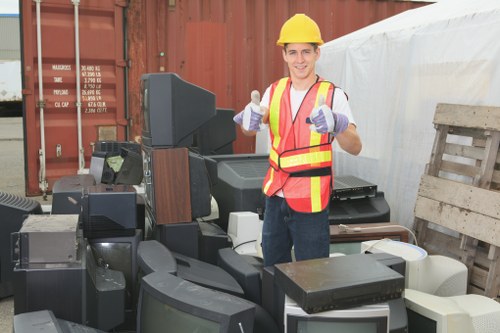
London businesses move quickly, and offices change just as quickly. Teams grow, departments shrink, leases end, refurbishments begin, and working patterns change. That is why office clearance is often needed at short notice. A professional clearance team can remove bulky items and leftover contents without causing unnecessary delay to your schedule.
In many London buildings, clearance work must fit around shared entrances, narrow corridors, service lifts, security checks, and strict time windows. In places like Westminster, the City, Canary Wharf, Southwark, Shoreditch, Hammersmith, and Croydon, access can be just as important as speed. A local service is better placed to plan around those conditions and keep the job moving.
Office clearance also helps businesses stay organised. Rather than letting redundant furniture and old equipment build up in storage rooms, basement areas, or unused floors, a clearance creates space for productive use. It can also support a safer workplace by reducing trip hazards, blocked walkways, and clutter around fire exits.
What Office Clearance in London Typically Includes

Every office is different, so the exact service can vary. Some customers need a full strip-out of a floor at the end of a tenancy, while others only need a few items taken away. A good office clearance service should be flexible enough to handle both.
Typical items removed during office clearance in London include:
- Desks, chairs, meeting tables, and reception furniture
- Cabinets, shelving, drawers, and storage units
- Computers, monitors, printers, phones, and related IT equipment
- Archive boxes, paperwork, stationery, and general office clutter
- Kitchen items, lockers, small appliances, and breakroom furniture
- Display units, partition panels, and occasional fixtures
- Mixed rubbish from clear-outs, reorganisations, or post-move waste
Some premises may also need help with separating recyclable materials from general waste. In a city like London, where space is limited and disposal rules must be followed carefully, sorting the items properly makes the process more efficient and more responsible.
If you have confidential documents or sensitive materials, it is sensible to ask how those items are handled. Many businesses want reassurance that paperwork, hard drives, and obsolete records are dealt with in a careful and secure way before anything leaves the premises.
Who Uses Office Clearance Services?
Local customers across commercial and mixed-use properties

Office clearance is not just for large corporations. In London, the customer base is varied and often includes smaller businesses, landlords, managing agents, and organisations with short project deadlines. The service is useful wherever office contents need removing quickly and with minimal disruption.
Common customers include:
- Office tenants at the end of a lease or during a relocation
- Property managers preparing a unit for new occupiers
- Facilities teams clearing surplus furniture or equipment
- Landlords dealing with left-behind contents after a tenant moves out
- Start-ups and SMEs upgrading workspace layouts
- Large organisations removing old equipment during a refit or merger
- Co-working operators refreshing shared areas or private offices
London’s commercial property stock is incredibly mixed. You might be in a high-rise office tower in Canary Wharf, a converted terrace in Islington, a multi-occupancy building in Holborn, or a studio unit in Hackney. Each location brings different access points, loading arrangements, and building rules. A local office clearance company is usually better prepared for these realities than a team unfamiliar with the city.
Office clearance in London is often requested when time is tight and the building needs to be handed over in a tidy condition. That is why people value a service that is practical, responsive, and organised from the start.
How the Service Works
A straightforward process designed for busy premises
Most customers want a clearance process that is simple to arrange and easy to understand. A professional team should be able to explain what will happen, what access is needed, and how long the work is likely to take, without creating confusion.
In general, office clearance follows a clear sequence:
- Initial discussion — You explain the size of the job, the type of items to be removed, and any building restrictions.
- Assessment — The team considers access, loading, floor level, parking, lift use, and any special handling requirements.
- Quote preparation — You receive a no-obligation quote based on the details provided and the scope of the work.
- Scheduled clearance — A suitable time is arranged, often to fit around business hours or building rules.
- Removal and sorting — Items are taken away, with reusable and recyclable materials separated where possible.
- Final tidy-up — The cleared area is left in a neat state, ready for cleaning, inspection, or the next stage of work.
Clear communication matters. In a city with many managed buildings and strict operational rules, customers appreciate a team that arrives prepared and works efficiently. If the office is on a busy street or in a restricted access zone, planning makes a big difference to how smoothly the job runs.
What Makes London Clearance Jobs Different?

London is not like a suburban business park with wide roads and plenty of parking. A lot of offices here are in places with limited loading options, narrow stairwells, shared entrances, or strict time windows for waste removal. That means the local knowledge of the clearance team really matters.
Some of the most common challenges include:
- Parking restrictions and controlled zones
- Busy streets with limited stopping space
- Lift bookings that must be arranged in advance
- Building management rules for noise, access, and waste handling
- Upper-floor offices without easy service access
- Traffic congestion affecting timing and loading
These issues can slow down a poorly planned clearance. A team familiar with London office environments is more likely to arrive with the right equipment, understand how to move items safely, and keep the work flowing around the building’s requirements. That matters in areas like the West End, the City, South Bank, Camden, Tower Hamlets, and beyond.
There is also the matter of working respectfully in shared buildings. Noise, corridor access, and lifts may all need consideration, especially where other tenants are operating nearby. A professional service should take care to minimise disruption while still completing the job properly.
Preparing for an Office Clearance
A useful checklist before the team arrives

A little preparation can make an office clearance faster and more efficient. It also helps reduce the chances of accidentally removing items that need to stay in place. If your business is arranging an office move or a shutdown, it is worth creating a simple plan before the clearance date.
Preparation checklist:
- Separate items that must remain on site
- Identify any confidential files, archived records, or sensitive hardware
- Label equipment that is being reused, relocated, or disposed of
- Tell building management about the scheduled clearance if required
- Reserve lifts or loading bays where necessary
- Check whether parking or access permits are needed
- Make sure valuables, personal items, and important documents are removed in advance
- Let the team know about stairs, narrow doorways, or fragile surfaces
It can also help to create zones for items that are being kept, donated, recycled, or removed. That way the team can work methodically and avoid confusion. If several departments are involved, nominate one person to coordinate the clearance details on the day.
For offices in central areas or busy business districts, preparation is especially useful. The better the planning, the easier it is to complete the job without unnecessary delays or repeated visits.
Pricing Factors for Office Clearance in London
What affects the cost?
Customers often want to know what influences the cost of office clearance, and that is completely reasonable. While exact pricing depends on the specific job, there are several factors that usually shape the quote.
Common pricing factors include:
- The size of the office or number of rooms/floors
- The volume and type of items to be removed
- Ease of access, including stairs, lifts, and loading areas
- Parking distance and whether permits are required
- Urgency or out-of-hours timing
- Whether items need careful handling or separating
- Any additional labour needed for dismantling or moving bulky furniture
In London, access is often a major part of the job. A small office on the third floor of a building with no lift can take more time than a larger ground-floor space with direct vehicle access. That is why accurate information at the quotation stage is important.
Request a free quote with as much detail as possible. If you can describe the items, the floor level, and any building restrictions, it is easier to provide a clear estimate and schedule the right team size for the work.
Why Choose a Local London Office Clearance Company?
Local experience can make the whole process easier
There are clear benefits to working with a local company that regularly handles office clearance across London. City knowledge, flexible scheduling, and familiarity with different building types all help create a smoother experience.
Benefits of choosing a local team:
- Better understanding of borough-specific access and parking issues
- More practical planning for busy streets and restricted loading areas
- Faster response for urgent clearances and short notice jobs
- Experience with offices in modern towers, converted buildings, and mixed-use premises
- Awareness of the needs of landlords, tenants, and managing agents
- More efficient handling of large, bulky, or awkward items
A local team is often more flexible when it comes to timing too. Many businesses prefer clearances before opening hours, after staff leave, or over weekends to reduce disruption. In a city that never seems to stand still, flexibility can be a major advantage.
When you need a workspace cleared with minimum fuss, local knowledge is not a small detail — it is part of what makes the job work.
Areas Covered Across London
Office clearance services are useful across Greater London, from central business districts to suburban office estates. Many jobs involve buildings close to transport hubs, main roads, or mixed commercial and residential streets. The important thing is not only where the office is, but how the building operates and what access is available.
Areas commonly covered include:
- Central London areas such as Westminster, the City, Holborn, and the West End
- East London locations including Shoreditch, Bethnal Green, Whitechapel, Stratford, and Canary Wharf
- North London areas such as Camden, Islington, Finsbury Park, and Tottenham
- South London locations including Southwark, Lambeth, Peckham, Wimbledon, and Croydon
- West London areas such as Hammersmith, Kensington, Chelsea, Ealing, and Hounslow
- Outer borough business districts and mixed commercial areas throughout Greater London
Whether your office is in a tall block, a converted townhouse, a shared business centre, or a light industrial unit with office space above, the same need applies: a tidy, efficient clearance that respects the building and the surrounding area.
What Happens to the Items Removed?
Reuse, recycling, and responsible disposal
Many office items do not need to go straight to waste. Desks, chairs, cabinets, and partitions may be suitable for reuse, while other items can often be separated for recycling. Good clearance practice looks at what can be diverted away from general disposal wherever possible.
This is important for customers who want to keep their clearance as responsible as possible. It is also helpful for businesses reducing the amount of material sent out from busy London premises. The process can include sorting items into categories such as reusable furniture, recyclable materials, confidential waste, and general rubbish.
If your office contains IT equipment, it is sensible to ask how those items are handled. Computers, monitors, servers, and accessories can contain components that should be processed carefully. A professional service should be able to advise on the best way to separate those items from general office waste.
For many companies, this part of the service matters just as much as the removal itself. A clear, orderly approach gives peace of mind and helps the office handover go more smoothly.
Commercial and Residential Property Considerations
London has many office spaces above shops, inside mixed-use buildings, or in converted properties that sit close to homes. That creates extra practical considerations when arranging a clearance. Noise, access routes, and timing can all matter, especially where businesses share walls, lifts, entrances, or courtyards with residential occupants.
In these situations, a careful office clearance team should work neatly and respectfully. This means avoiding blockages in communal areas, protecting walls and floors where needed, and keeping disruption to a minimum. For properties in places like Fulham, Battersea, Clapham, Hackney, and parts of the City fringe, that awareness is particularly useful.
It is also helpful to think about neighbours and building rules before the job starts. If there are restrictions on vehicle access, noise, or refuse storage, share them early so the clearance can be organised around them. That can save time and prevent avoidable problems.
Common Reasons for Booking Office Clearance
When businesses usually need the service
There are many practical reasons to arrange office clearance, and not all of them involve a major move. Some customers simply want to free up space and improve the way their office works day to day.
Typical reasons include:
- End-of-tenancy clearance before handing the premises back
- Office relocation and the removal of unwanted furniture
- Refurbishment or redesign of the workspace
- Clearing storage rooms, basements, or archive areas
- Replacing old desks, chairs, and filing systems
- Removing surplus equipment after remote working changes
- Preparing a vacant unit for inspection or re-letting
Many London businesses also use clearance services during restructuring, downsizing, or after a department changes its layout. In these situations, it is often less about a complete emptying of the office and more about selectively removing the items that are no longer needed.
Book your service now if you want the job completed efficiently and with the least possible interruption to your operations.
FAQs About Office Clearance in London
Questions real customers often ask
How much notice do I need to give?
That depends on the size of the job and how busy the schedule is. Smaller clearances may be arranged quickly, while larger office clearances benefit from more lead time, especially if lift bookings or parking arrangements are needed.
Can you clear offices in buildings with no lift?
Yes, many London offices are on upper floors without easy lift access. It is important to mention stairs, narrow landings, and floor levels when requesting a quote so the team can prepare properly.
Do I need to pack everything first?
Not always. Many customers do some sorting beforehand, but office clearance can often include loose items, furniture, and mixed contents. If you want specific items left behind, it helps to label them clearly.
What about confidential paperwork?
Any paperwork or records that should not be mixed with general waste need to be identified early. Ask how those items are handled so you can plan the clearance safely and appropriately.
Can you help with part-clearances?
Yes. Not every job is a full office emptying. Many customers just want selected items removed, such as old desks, unused filing cabinets, or obsolete IT equipment.
Do you work around business hours?
Where possible, yes. Many London offices prefer early, late, or out-of-hours clearances to reduce disruption to staff, customers, and nearby businesses.
Is parking or access a problem?
It can be in many parts of London, which is why accurate details matter. If you have loading instructions, parking restrictions, or access codes, pass those on before the day of the job.
Choose a Service That Fits Your Office and Your Schedule
Every office clearance should be planned around the building, the contents, and the customer’s timetable. That is especially true in London, where even simple jobs can become complicated if access is not considered early enough. A good service should feel organised, responsive, and practical from the first enquiry to the final sweep-up.
Whether you manage a small office in a converted building or oversee a large workspace in a commercial tower, the right clearance team helps you move forward without dealing with piles of unwanted furniture or equipment. It can also support a smoother handover, a better refurbishment process, or a cleaner start in a new location.
If you need office clearance in London, choose a local team that understands the realities of the city and can adapt to them. Contact us today to discuss your requirements, request a free quote, or book your service now and get the space cleared with less hassle.
Practical help when you need it most
Local experience, sensible planning, and careful removal are what make the difference for busy London customers. When the office needs clearing, you want a service that is straightforward, respectful, and efficient.
Ready to get started?
Speak to a local clearance team and arrange a visit or quote at a time that suits your schedule. Whether it is a partial office tidy-up or a full commercial clearance, the right support can make a demanding job much easier.