Office Clearances in London
If you are planning a move, closing a workspace, refurbishing a floor, or simply making room for a better way of working, office clearances in London can make the whole process far less stressful. From compact studio offices in converted townhouses to large commercial suites in the City, every workplace has its own layout, access challenges, and time pressures. A well-organised clearance helps you clear space quickly, protect reusable items, and deal properly with furniture, equipment, and office waste without disrupting business more than necessary.
London businesses often need a clearance service that can work around busy roads, controlled parking zones, lift restrictions, shared entrances, and tight stairwells. Whether you are based in Shoreditch, Camden, Westminster, Canary Wharf, Southwark, Hammersmith, Croydon, or beyond, using a local team means the job can be planned with the realities of the area in mind. That matters when you need desks removed before contractors arrive, archive rooms emptied before a lease handover, or an entire floor cleared after a relocation.
This page is designed for local customers who want a practical, reliable service. If you need a full office clearance, a partial clearance, or help removing old furniture and equipment from a commercial property, you can request a quote and arrange a service that fits your schedule. Contact us today to discuss your space, your timeframe, and what needs to go.
What office clearances in London involve

An office clearance is more than simply carrying items out of a building. It usually involves identifying what should be removed, what can be reused or relocated, and what needs to be separated for responsible disposal. In a city like London, where commercial buildings range from modern high-rises to older properties with narrow access, the process must be handled carefully and efficiently.
A typical clearance may include desks, chairs, filing cabinets, shelving, meeting tables, storage units, reception furniture, small office items, IT hardware, packaging, and general office contents. Depending on the property, it may also involve strip-out support, archive removal, clearance of breakroom items, and clearing of storage rooms, basements, or lock-ups attached to the workplace.
For many clients, the main benefit is not just removing clutter. It is creating a usable, clean, and empty space that is ready for handover, refit, or reoccupation. Office clearances London customers often need a service that can adapt to shared buildings, landlord rules, loading restrictions, and strict deadlines.
Who needs this service
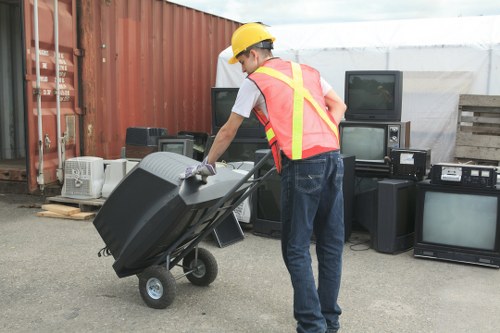
Office clearance services are used by a wide range of customers across the capital. Some are small businesses moving out of co-working spaces. Others are larger firms clearing a whole floor after a restructure. Some customers are landlords, managing agents, or facilities teams who need a suite emptied before new tenants move in. Others are businesses that only need a partial office clearance to remove old furniture and make room for new layouts.
This service is also useful for professional practices, agencies, charities, retail back offices, clinics, and educational or training spaces. If you work in central London, you may be dealing with tight lift bookings and concierge rules. If your office is in outer boroughs such as Ealing, Enfield, Wimbledon, Walthamstow, or Bromley, there may be driveway access, shared estate parking, or building management procedures to consider.
In many cases, customers simply want the office cleared without having to coordinate several different contractors. That is why a single, organised clearance team can be the easiest option. Book your service now if you want to save time and avoid dealing with the heavy lifting yourself.
Why local London knowledge matters

London is not a one-size-fits-all city. A clearance in the West End is very different from one in an industrial estate in Park Royal or a managed office block near London Bridge. Local knowledge helps with route planning, parking, timing, and access, especially where congestion, loading bays, or building rules affect how quickly work can be completed.
Busy roads can add delays if a vehicle has to be parked far from the entrance. Some properties require advance notice for lifts, service entrances, or goods bays. Others have security desks, visitor checks, or restricted hours for waste removal. A team used to working across London can anticipate these issues and prepare properly rather than discovering them on the day.
There is also value in understanding the mix of building types. London offices may sit in converted warehouses, modern business centres, listed buildings, mews properties, or shared commercial units above retail premises. Each setting comes with different moving challenges. Choosing a local company for office clearances in London helps keep the job efficient and reduces avoidable delays.
What is included in an office clearance
Every clearance is slightly different, but many services are built around a similar core set of tasks. The aim is to remove the unwanted items safely, leave the site tidy, and keep disruption to a minimum. Customers often want to know exactly what can be handled so they can plan the day properly and separate items that need to stay.
Common items included in an office clearance are:
- Desks, workstations, meeting tables, and boardroom furniture
- Office chairs, stools, and seating from reception or breakout areas
- Filing cabinets, shelving, storage cupboards, and lockers
- Old printers, monitors, keyboards, and other IT-related items
- Archive boxes, paperwork storage, and general office clutter
- Kitchen or breakroom items such as tables, chairs, and small appliances
- Reception desks, display units, and fitted furniture where removal is agreed
- Miscellaneous commercial waste and unwanted contents from storerooms
Depending on the property and the arrangement, some teams can also help with strip-out work, including removing loose fixtures and furnishings before a refurbishment. Where required, they can separate items for reuse, donation, recycling, and disposal. This is especially useful if you want to keep the process tidy and organised from the start.
For London customers, it is often helpful when a service can cover both the visible office areas and the hidden spaces that tend to accumulate items over time, such as cupboards, basements, plant rooms, and filing areas. That way, the premises can be left properly clear rather than only partially emptied.
How the clearance process works

A good office clearance process should be straightforward, transparent, and planned around your building’s rules. The first step is usually a discussion about the size of the office, the type of items involved, access conditions, and your preferred timeframe. This helps shape the job and identify any likely challenges before work begins.
Next comes an assessment of the space, either through photos, a site visit, or a detailed description of what needs to be removed. For larger commercial clearances in London, this stage is especially important because it helps determine the labour, vehicle access, and amount of time needed on site. It also gives the team a chance to plan how to move items out safely through corridors, lifts, or staircases.
On the day, the team will typically arrive with the right equipment to remove items efficiently and manage heavier furniture carefully. As items are taken out, they may be sorted so that reusable, recyclable, and waste materials are handled separately. Finally, the cleared areas are tidied so the property is left in a presentable condition for handover, cleaning, or refurbishment.
Why businesses choose office clearance instead of doing it themselves
It can be tempting to ask staff to help clear an office, especially when the space looks manageable at first glance. But once the work starts, many businesses realise there are more heavy items, awkward access points, and disposal decisions than expected. A professional team can save time and reduce the risk of disruption or injury.
There are several reasons why companies across London choose a specialist service:
- Less disruption to staff, customers, and daily operations
- Safe lifting of heavy or bulky furniture and equipment
- Better planning around parking, building access, and timing
- Responsible handling of items that need recycling or disposal
- Faster turnaround when you have a lease deadline or move-out date
- Cleaner results than trying to manage the job in stages with limited resources
For many commercial customers, the real value is keeping the office move or closure on schedule. If one team handles the clearance, there is less need to coordinate multiple people, vans, and waste arrangements. That can make a huge difference when you are working to a deadline in busy parts of the capital.
If your office is still occupied during part of the clearance, a local team can often work in phases so key areas remain usable for as long as possible. That flexibility is especially helpful for businesses that cannot afford a complete shutdown.
Preparing for an office clearance

A little preparation can make the clearance smoother and help the team work faster. It also reduces confusion about what should leave the property and what should remain. If your office is in central London, advance preparation is particularly helpful because access windows may be limited and parking may be tightly controlled.
Useful preparation steps include:
- Separate items that are staying from items that are going
- Label confidential documents, archived files, and sensitive materials
- Back up and remove important data from IT equipment before collection
- Check any building rules for lifts, loading bays, security, or access times
- Tell staff which areas should be left untouched
- Clear small personal items from desks and storage units if required
- Arrange any permissions needed from landlords, facilities teams, or managing agents
If you are clearing a shared office or serviced workspace, it is wise to confirm the building’s procedures in advance. Some properties in London require booked slots for loading or strict use of service entrances. Sorting this out beforehand helps avoid unnecessary waiting and makes the day run more smoothly.
Request a free quote once you know the basic details of the job. Even if you are unsure about the final amount of furniture or equipment, a clear description of the space usually helps start the planning process.
Pricing factors for office clearances in London
Customers often want a straightforward price, but clearance work is usually affected by several practical factors. Since offices vary in size and access, it is more accurate to consider what influences the cost rather than guess from the outside. That also helps customers compare services fairly.
Typical pricing factors may include:
- The size of the office or commercial unit
- The volume and type of furniture or equipment to be removed
- How easy it is to access the building
- Whether there are stairs, lifts, or long internal routes
- The need for out-of-hours or time-restricted work
- The level of sorting, dismantling, or separation required
- Any additional strip-out or clearance from storage, basement, or archive areas
In central London, access and timing can make a bigger difference than in less busy areas because vehicle stopping spaces may be limited. In suburban boroughs, the job may be affected by estate rules, residential restrictions, or longer walking distances from the vehicle to the entrance. A local provider can usually assess these details more accurately and explain the likely approach before the work begins.
When you ask for a quote, it helps to share photos, the approximate floor area, the number of items to be removed, and any access notes. The more information you give, the easier it is to receive a realistic quote based on the actual job.
Residential and commercial office clearances across the capital
Although office clearances are often associated with business premises, many customers are actually dealing with home offices, converted rooms, or hybrid workspaces. London has a huge number of properties where work areas are built into flats, maisonettes, townhouses, and mixed-use buildings. These spaces may only need a few items removed, or they may require a full clear-out after a change in business setup.
Commercial clearances, on the other hand, often involve larger volumes, multiple departments, and more structured handover requirements. That might include entire floors in business districts, offices within retail buildings, or units in multi-tenant commercial centres. In these situations, the team must work carefully to avoid disturbing neighbouring occupants and to respect building procedures.
Both types of customer benefit from a service that understands the practicalities of London properties. Narrow staircases in period buildings, loading restrictions in the Square Mile, and long corridors in large office blocks can all affect how the job is done. Choosing the right team means those details are handled from the outset.
Environmental responsibility and item separation
Many customers now want to know what happens to items after removal. A responsible office clearance should aim to separate furniture and materials in a sensible way so that reusable items are not treated the same as general waste. This can be especially important where a business is trying to reduce landfill and manage unwanted items responsibly.
Where possible, items may be sorted into categories such as:
- Reusable office furniture
- Materials suitable for recycling
- Electrical and electronic equipment for appropriate handling
- General office waste
- Items requiring special attention due to their condition or type
This approach is particularly useful for larger clearances where different categories of items are mixed together. It also helps businesses feel more confident that the process has been handled carefully rather than rushed. If sustainability matters to your organisation, mention it early so the service can be planned accordingly.
Office clearances in London are often easier to manage when the team is set up to separate items properly from the beginning, rather than sorting everything at the end.
Areas covered across London
Office clearance work is available across a wide range of London districts, from central business areas to outer boroughs and local commercial hubs. The city’s mix of high streets, industrial estates, business parks, and office clusters means demand is spread across many neighbourhoods.
Areas commonly covered include:
- Central London, including the City, Westminster, and the West End
- East London, including Shoreditch, Hackney, Stratford, and Canary Wharf
- North London, including Camden, Islington, Enfield, and Haringey
- South London, including Southwark, Lambeth, Croydon, and Wimbledon
- West London, including Hammersmith, Ealing, Brentford, and Kensington
- Greater London business areas and surrounding commercial districts
This broad coverage is helpful because customers rarely want to spend time finding separate contractors for different boroughs. A local team can usually adapt to the local road network, parking conditions, and building access requirements more easily than a provider unfamiliar with the area.
What makes a good office clearance service
When choosing a company for a clearance, most customers look for practical qualities rather than sales language. You want a team that turns up prepared, communicates clearly, handles items properly, and respects the building. In London, that becomes even more important because many offices have neighbours, time restrictions, and shared spaces.
A strong service should offer:
- Clear communication before the job
- A sensible plan for access and timing
- Experienced handling of office furniture and equipment
- Careful sorting of items where required
- Respect for building rules and shared areas
- Tidy completion and practical follow-up if needed
It is also useful if the team understands that every business has different priorities. One customer may want a full clearance by Friday evening. Another may need a phased removal so staff can continue working until the last day. A good local provider should be able to adapt rather than impose a one-size-fits-all approach.
For many London businesses, trust comes from simple things: being on time, working efficiently, and leaving the space in a presentable condition.
Common situations where office clearances are needed
There are many real-life situations where a clearance becomes necessary. Some are planned well in advance, while others come up quickly and need a fast response. In both cases, having an organised service available locally can reduce stress and help keep the situation under control.
Common reasons include:
- Business relocation to a new address
- End-of-lease handover or office vacancy
- Office refurbishment or fit-out work
- Downsizing after a restructure
- Clearing storage rooms, archives, or underused areas
- Replacing old furniture with a new layout
- Closing a branch or satellite office
Sometimes the need is very specific, such as removing outdated desks before new furniture arrives or clearing cabinets so painters and decorators can get started. In other cases, the whole office needs emptying within a short window. If your situation is time-sensitive, be clear about deadlines so the work can be planned around them.
Frequently asked questions
Can you clear an office while other staff are still working?
Yes, in many cases the job can be arranged in phases. That is useful when only part of the office needs to be cleared at a time or when the business must remain operational during the process. Good planning helps reduce disruption to staff and visitors.
Do you handle bulky or awkward furniture?
Most office clearances involve at least some bulky items, such as desks, cabinets, and meeting tables. A professional team should be prepared to remove these safely, including dismantling items where necessary to get them out of the building properly.
What about offices in buildings with restricted access?
That is very common in London. Many offices have booking systems for lifts, loading bays, security desks, or time-limited access. A local clearance team should plan around those restrictions and work with the building’s requirements.
Can confidential documents be removed as part of the clearance?
Yes, confidential paperwork can usually be included if it is clearly identified in advance. Many businesses prefer to separate sensitive documents from general office waste so they can be handled appropriately.
How far in advance should I book?
As early as possible, especially if you have a move-out date, contractor start date, or limited access window. London schedules can be tight, so booking in advance helps secure the right day and time for the work.
Do you cover small office clearances as well as large ones?
Yes. Not every job is a full floor or a major commercial move. Smaller clearances, such as single rooms, home offices, or compact business units, are often just as important and can be arranged to suit the space.
How to decide whether you need a full or partial clearance
Some customers are unsure whether they need everything removed or only certain items taken away. The answer usually depends on what the space will be used for next. If you are handing the property back to a landlord, a full clearance may be the right choice. If you are refurbishing or reorganising, a partial clearance might be enough.
A partial service can be useful when you want to keep certain furniture, leave behind fitted items, or retain equipment for another department. A full clearance is more suitable when the office must be emptied completely. If in doubt, it helps to list the items that must remain and the items that should go. That makes the quote and the planning much easier.
Contact us today if you are unsure which option fits your situation. A short conversation about the space and your deadline can usually help clarify the best approach.
Book office clearances in London with confidence
When you need office clearances in London, the best result usually comes from a service that understands the pace of the city, the variety of building types, and the importance of keeping your business moving. Whether you are clearing a small workspace in a converted building or a larger commercial office in a busy district, the right local team can make the process simpler and far less disruptive.
With proper planning, careful handling, and a clear understanding of your site, an office clearance can be completed smoothly and with minimal stress. If you are ready to make space, hand back a property, or prepare for a new layout, request a free quote and get the process started. Book your service now to arrange a clearance that works around your London schedule.
From one-off removals to larger commercial clear-outs, choosing a service that is familiar with London’s access issues, parking restrictions, and varied office buildings can save time and effort. If you need a practical solution for your workplace, now is the right time to take the next step.